
The finance ministry has announced that all banks, including Regional Rural Banks, will remain open on Sunday, September 27, 2026, to ensure public convenience amidst a proposed three-day strike by the United Forum of Bank Unions (UFBU) starting September 28, 2026. The strike, if it materialises, seeks a 5-day banking week and pension reforms.

The Indian government has introduced a 0.4% fee on UPI transactions above Rs 2,000 for merchants, effective October 15, sparking strong opposition from political parties and traders. Despite accusations of foreign influence and demands for a rollback, the finance ministry and top functionaries have stated there will be no reversal, citing the need for a self-sustaining digital payments ecosystem.
Parliament was informed that UPI has onboarded 55.49 crore users by June 2026, with transactions reaching 24,162 crore in volume and Rs 314 lakh crore in value in FY 2025-26. The platform, operated by NPCI, is expanding internationally through NIPL, facilitating cross-border payments and assisting other nations in building similar systems. Significant efforts are also underway by the Government, RBI, and NPCI to enhance the security and transparency of UPI transactions, including risk-based limits, security frameworks, and public awareness campaigns against cyber-crime.

The Finance Ministry has clarified that the decision to impose a 0.4% Merchant Discount Rate (MDR) on UPI transactions above Rs 2,000 was made independently, refuting claims of foreign influence. The ministry stated the policy aims to build a self-sustaining digital payments ecosystem, with MDR funding infrastructure and supporting small merchants.

The GST Council is set to discuss the application of GST on merchant fees for UPI transactions exceeding Rs 2,000. This comes as a new Merchant Discount Rate (MDR) of 0.4% (capped at Rs 300) is effective from October 15 for such transactions, which, as a service, would typically attract an 18% GST levy. The Council's decision is anticipated to consider consumer interests, with merchants potentially able to claim Input Tax Credit.

Bankers said the impact could become more visible from September 29 as customers could withdraw larger amounts of cash, although ATM operations are increasingly managed through third-party cash-loading arrangements.

Opposition parties, including Congress, TMC, and RJD, have strongly criticised the government's decision to impose a 0.4% Merchant Discount Rate (MDR) on UPI transactions exceeding Rs 2,000 made to merchants. They allege the move is a result of "American imperialism" and will lead to increased commodity prices, while the government maintains the charge is on merchants and not consumers, with person-to-person transactions remaining free.

The Indian government has officially declared the Pakistan-based Shahzad Bhatti Network (SBN) a terrorist organisation under the Unlawful Activities (Prevention) Act (UAPA). This action, announced by Union Home Minister Amit Shah, targets a group involved in cross-border smuggling of arms, explosives, and narcotics, as well as inciting youth into terrorism and spreading hateful digital content. SBN is accused of threatening India's democratic structure, communal harmony, and internal security.

The Congress party has criticised the Modi government over a notification regarding UPI transactions, alleging it paves the way for imposing fees, especially on transactions above Rs 2,000. Rahul Gandhi claimed the government is surrendering to American pressure, while Mallikarjun Kharge highlighted the potential burden on common citizens amidst inflation. The government's notification prohibits charges on UPI transactions up to Rs 2,000 but remains silent on higher amounts, sparking fears of a "Digital Payments Tax."

Union Minister Jitendra Singh stated that human-led artificial intelligence will be the defining force in India's journey to becoming a developed nation by 2047. Speaking at the 29th National Conference on e-Governance, he emphasised that technology must strengthen governance without replacing human accountability, advocating for responsible AI deployment with citizens at the centre. The conference concluded with the adoption of the Jaipur Declaration on e-Governance 2026, outlining a roadmap for AI-enabled, data-driven, and secure digital governance.

Former Haryana Chief Minister Bhupinder Singh Hooda has criticised the newly introduced fees on UPI payments, stating they will lead to increased inflation for the common man. He dismissed government claims that customers would not be burdened, arguing that merchants would pass on the costs. Hooda demanded the immediate withdrawal of these fees, highlighting that the government's move contradicts its 'Digital India' initiative.
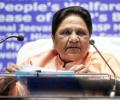
BSP chief Mayawati has criticised the Centre's decision to introduce a 0.4 per cent fee on UPI merchant transactions exceeding Rs 2,000, effective October 15. She termed it a "capitalist profiteering attitude" that burdens the common people, while the government clarified that the charge is on merchants and not customers for person-to-person transactions.

The Indian government has introduced a 0.4% transaction fee on UPI payments above Rs 2,000 for merchants, effective October 15, sparking a political row. The Congress party has labelled it a "Modi tax" and accused the government of succumbing to US pressure, while the BJP has defended the move, clarifying that consumers will not be charged and small vendors are protected. The finance ministry reiterated that the charge is on merchants, not customers.

The Congress party has strongly refuted claims by Parliamentary Standing Committee on Finance Chairperson Bhartruhari Mahtab that opposition MPs supported levying a Merchant Discount Rate (MDR) on UPI transactions. Congress MP Manish Tewari termed Mahtab's remarks "erroneous and fallacious," clarifying that the committee's recommendation was to "explore" revenue models, not to implement MDR. The party accused Mahtab of misleading due to his recent switch to the BJP.

Fintech firm BharatPe has publicly supported the government's new Merchant Discount Rate (MDR) framework for UPI merchant transactions, which introduces a 0.4% fee on transfers over Rs 2,000. The company has also distanced itself from its former co-founder Ashneer Grover's strong criticism of these changes, stating his remarks are personal and do not reflect BharatPe's official position. BharatPe believes the new framework will strengthen digital payment economics while protecting consumers and small merchants.
The Reserve Bank of India (RBI) has endorsed the introduction of a Merchant Discount Rate (MDR) on UPI transactions exceeding Rs 2,000, effective October 15. This move, which levies a 0.4 per cent fee on merchant payments above the threshold, aims to bolster the long-term sustainability and growth of India's digital payments ecosystem. The RBI clarified that person-to-person (P2P) transactions and small person-to-merchant (P2M) payments below Rs 2,000 will remain free for users, ensuring no direct charge on customers.

TRAI Chairman Anil Kumar Lahoti has called for robust safeguards, human oversight, and intervention capabilities as Artificial Intelligence becomes increasingly integrated into telecom networks. While acknowledging AI's potential to transform network management and threat detection, Lahoti stressed the need for responsible AI deployment, risk assessments, and clear accountability to ensure consumer trust and prevent misuse, especially in combating online fraud.
The Reserve Bank of India (RBI) is planning to extend tokenisation to various financial asset classes, building on its successful trials with certificates of deposit (CDs). This move aims to enhance the efficiency of issuance, trading, and settlement of financial assets, leveraging blockchain technology and wholesale Central Bank Digital Currency (CBDC) for atomic settlements.
Jammu and Kashmir Chief Minister Omar Abdullah has expressed support for the Centre's decision to levy charges on UPI transactions, citing the cost of maintaining the digital payment infrastructure. However, he emphasised the need to protect retail consumers from these fees. Abdullah also discussed the upcoming seven-day Assembly session, highlighting the government's commitment to smooth functioning and addressing MLAs' concerns, and touched upon efforts to tackle drainage issues affecting water bodies.

J R D Tata, chairman of the Tata group from 1938 to 1991, said that whenever he had to make a difficult decision, he would ask himself, what will be good for India, and what will be good for the Tatas. If he had a doubt, he would decide in favour of India. In the long run, it would turn out well for the Tatas too, he said, points out Arun Maira.
The Congress party has strongly refuted government claims that its MPs on the Parliament Standing Committee on Finance supported a fee on high-value UPI payments. Congress leaders, including Gaurav Gogoi and Manish Tewari, stated that the "UPI tax" proposal was not specifically discussed by the committee, accusing the Modi government of diverting attention from public backlash and appeasing US companies. The government, however, cited the committee's report which pressed for a tiered Merchant Discount Rate (MDR) framework.

The National Payments Corporation of India (NPCI) stated that the Merchant Discount Rate (MDR) "is distributed only amongst the UPI ecosystem, to further invest into infrastructure resilience, innovation, cybersecurity (protecting the UPI infrastructure with banks and non-banks) and customer service."

The challenge thrown by the youth movement creates the opportunity for a more consequential debate on India's economic trajectory because it must remain centered on India's youth as its driving impulse, asserts former foreign secretary Shyam Saran.

Kazakh businessman Timur Turlov has been elected the new president of the world chess governing body FIDE, succeeding Arkady Dvorkovich. Turlov won a closely contested election against German entrepreneurs Wadim Rosenstein and Jan Henric Buettner, securing a four-year term. His victory comes amidst scrutiny over Russian influence and FIDE's financial independence, with Turlov campaigning on expanding digital reach and supporting smaller federations. He also addressed concerns about his ties to the outgoing administration and FIDE's commercial partner, Freedom Holding Corp.
The Finance Ministry has refuted allegations that US pressure influenced the decision to levy a 0.4% Merchant Discount Rate (MDR) on select UPI payments. It clarified that NPCI guidelines prioritise RuPay credit cards on UPI to foster a domestic payment ecosystem and that the MDR introduction aims to create a sustainable revenue model for smaller domestic companies, thereby protecting India's sovereignty in digital payments.
The Indian government has introduced a 0.4% fee on UPI transfers above Rs 2,000 made to merchants, effective October 15, ending nearly six years of free merchant payments. This move led to initial rallies in fintech stocks like Paytm and Mobikwik, though some later pared gains. Person-to-person transactions and small payments remain free for customers, with the fee being a Merchant Discount Rate (MDR).

Bharti Airtel's homegrown cloud platform, Airtel Cloud, has acquired approximately 40 customers within a year of its launch, with a significant portion coming from the manufacturing sector. The platform, designed for Indian companies, offers sovereign, telco-grade cloud infrastructure, connectivity, and GenAI-based provisioning, addressing the growing demand for secure, India-hosted data solutions, particularly for sensitive workloads and regulated sectors.

The opposition has intensified its criticism of the government's decision to impose a 0.4 per cent Merchant Discount Rate (MDR) on UPI transactions above Rs 2,000, effective October 15. Leaders like Rahul Gandhi and Jairam Ramesh allege the move is a result of US pressure, particularly from American card companies, and demand an immediate rollback, warning of increased costs for consumers.

Merchants will be subject to an 18 per cent Goods and Services Tax (GST) on the Merchant Discount Rate (MDR) for UPI payments exceeding Rs 2,000, but can mitigate this burden by claiming input tax credit (ITC), according to tax experts.

A new Merchant Discount Rate (MDR) on UPI transactions above Rs 2,000, effective October 15, could force small merchants and price-sensitive consumers to revert to cash, according to economic think tank GTRI. The move, which introduces a 0.4 per cent MDR with a Rs 300 cap and concessional rates for specific categories, is questioned by GTRI founder Ajay Srivastava, who suggests it's not a revenue issue for the government but potentially a response to US pressure regarding UPI and RuPay's preferential market position.
Finance Minister Nirmala Sitharaman has urged the Reserve Bank of India to accelerate its central bank digital currency initiatives, emphasising the need to sharpen capabilities with the digital rupee amidst rapid advancements in tokenisation, agentic AI, and quantum computing. She also highlighted critical concerns regarding cybersecurity, warning that autonomous AI systems are evolving rapidly and require robust safeguards. Sitharaman proposed a federated industry platform to give India's technology ecosystem a collective international voice.

India's nine key infrastructure sectors recorded a three-month low growth of 4.8 per cent in August, primarily due to reduced production in coal, natural gas, crude oil, and fertiliser, according to government data.

SEBI Chairman Tuhin Kanta Pandey stated that the National Stock Exchange (NSE) has not submitted any proposal seeking approval to trade on its own platform after getting listed, and such trading is currently not permitted. He also confirmed that SEBI would examine concerns raised by brokers and asset management companies regarding the new UPI Merchant Discount Rate (MDR) framework.
A Public Interest Litigation has been filed in the Supreme Court challenging the Centre's decision to impose a 0.4 per cent Merchant Discount Rate (MDR) on UPI person-to-merchant transactions exceeding Rs 2,000. The plea argues that the levy was introduced without adequate statutory safeguards, transparency, or public consultation, and questions its constitutional validity and potential adverse effects on merchants and consumers.

The Finance Ministry has clarified that the 0.4 per cent Merchant Discount Rate (MDR) on UPI transactions above Rs 2,000, effective October 15, is not expected to increase cash transactions or cause inflation. The ministry also dismissed allegations of US pressure influencing the decision, asserting that the policy aims to promote RuPay credit cards within the UPI ecosystem, and a monitoring mechanism will ensure the MDR burden is not passed on to consumers.

A high-level committee, including representatives from banks and payment associations, is set to decide on Merchant Discount Rate (MDR) for UPI transactions exceeding Rs 2,000 to merchants. While person-to-person and person-to-merchant transactions up to Rs 2,000 remain free, the move follows a recent amendment to the Payment and Settlement Systems Act, sparking debate and clarification from the Finance Minister that only certain high-value merchant transactions might incur charges.

Maharashtra's Chief Electoral Officer has formally requested the Election Commission to modify the ECINet software, seeking greater discretion for Electoral Registration Officers in addressing over 2 crore voter discrepancies.
Tax experts clarify that merchants will pay 18% GST on Merchant Discount Rate (MDR) for UPI payments exceeding Rs 2,000, effective October 15. However, registered merchants can claim Input Tax Credit (ITC), mitigating the tax burden. This move is expected to generate significant GST revenue for the exchequer while funding payment infrastructure.
Opposition MPs have voiced strong concerns regarding the government's decision to levy a 0.4 per cent fee on UPI payments above Rs 2,000 made to merchants, effective October 15. They argue that this "anti-people" move will negatively impact a large segment of the population, despite the finance ministry clarifying that the charge is on the merchant ecosystem and not directly on customers for P2P or small payments.

The Calcutta High Court has granted interim bail to Congress candidate Milan Pradhan, allowing him to campaign for the upcoming Nandigram bypoll. Pradhan, arrested on September 18 in connection with six criminal cases from 2007, received relief until October 20, with directions to surrender on October 21 and deposit bail bonds. The cases relate to charges including murder and Arms Act violations during the Nandigram anti-land acquisition movement.
